Why Choose an AI FPV Drone? AI-Assisted Flight Explained
by SkyVolt FPV Engineering Team · About the authors
- The Limit of Manual FPV
- What an AI Module Changes
- Where It Fits in a Real Mission
- What an AI Module Does Not Do
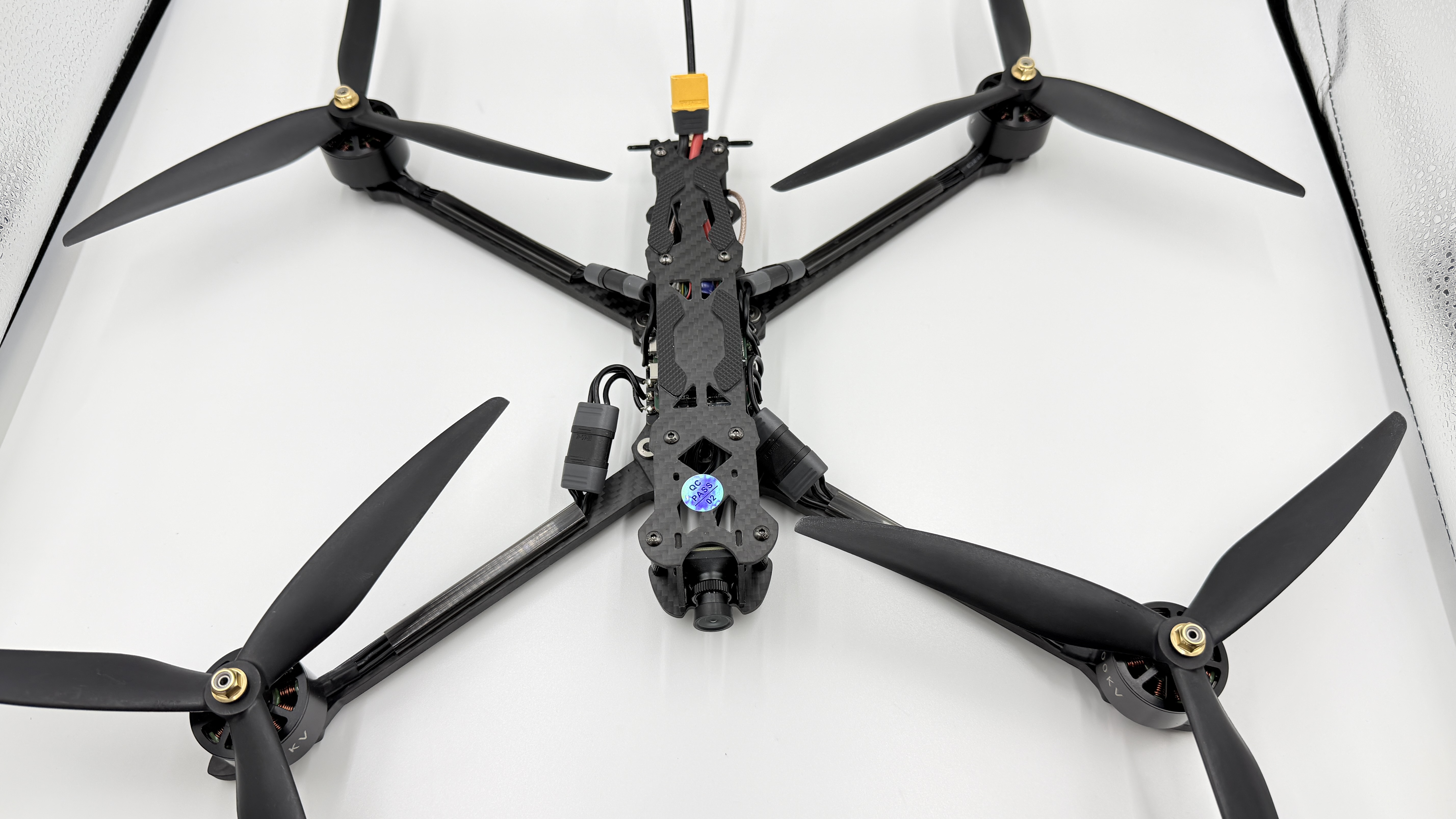
An AI module keeps the target locked and the picture stable, so one operator can fly demanding missions.
The Limit of Manual FPV
Traditional FPV asks one pilot to manage attitude, throttle, camera framing and target tracking at the same time. That is workable for short cinematic runs, but on a long inspection or patrol flight the workload — not the airframe — becomes the limiting factor.
Three symptoms show up repeatedly in the field:
- Target drift. Holding a moving subject centred takes constant stick correction, and framing slips as soon as the pilot checks telemetry.
- Footage instability. Manual control is affected by wind and terrain, and the resulting roll and jitter cannot be fully removed in post.
- Operator fatigue. Sustained manual control shortens useful flight time and increases the chance of a mistake.
What an AI Module Changes
An AI module adds a vision-processing layer between the camera and the pilot. Instead of only relaying video, it analyses the image and assists with:
- Automatic target locking and tracking. The module holds the selected object centred while the pilot flies the aircraft.
- Flight stability. Drift and wind-induced deviation are corrected automatically, which keeps the shot level in gusty or uneven terrain.
- A lower entry barrier. A less experienced operator can produce usable footage without years of stick time.
Where It Fits in a Real Mission
AI-assisted tracking earns its place whenever the aircraft must hold a subject rather than a position: perimeter patrol, observation of a moving vehicle, or inspection of a structure the pilot needs to keep in frame while repositioning.
Our AI-ST10 10-inch AI FPV drone combines the AI module with automatic target locking and auto-tracking. The hardware underneath is described in the FPV drone components guide, and payload limits are covered in how much payload an FPV drone can carry.
What an AI Module Does Not Do
An AI module assists the pilot; it does not fly the mission. Line-of-sight rules, battery management, airspace awareness and the go/no-go decision all remain with the operator. Target tracking improves how the aircraft holds a subject — it does not extend flight time or radio range, so endurance and link budgets still have to be planned separately (see long-range platform selection).
To discuss whether AI tracking suits your mission, talk to our engineering team.