FPV Drone Components: Complete System Guide
by SkyVolt FPV Engineering Team · About the authors
- The Seven Building Blocks
- Compatibility Basics
- Sizing the Build
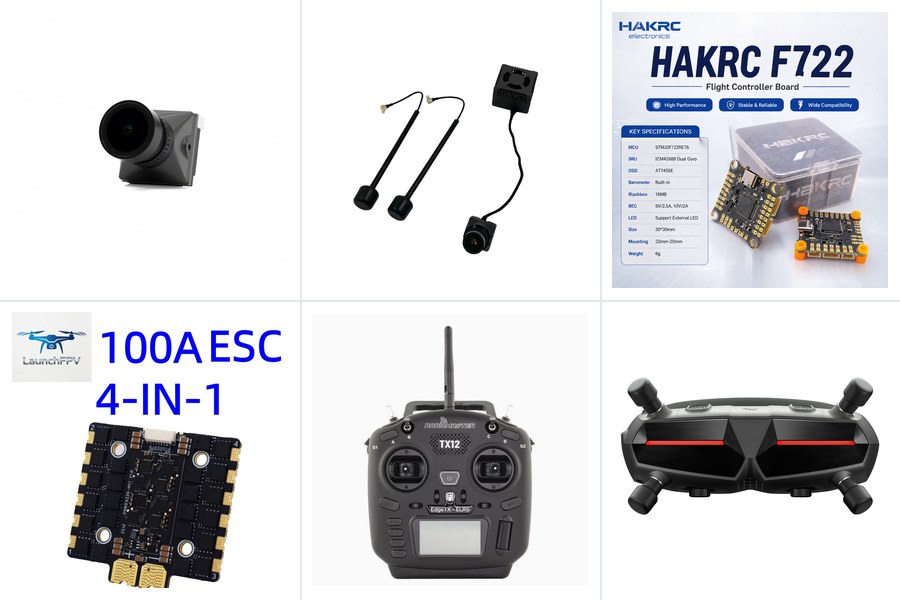
Camera, VTX, VRX, flight controller, ESC and radio link: how the seven core building blocks work together.
The Seven Building Blocks
- FPV camera. Captures the live image. Sensor size and latency matter more than resolution, and the sensor type is a mission decision of its own — the trade-off between heat detection and visual detail is compared in thermal imaging vs visible cameras.
- VTX. Broadcasts video to the goggles — power and antenna selection is covered in the FPV VTX guide.
- VRX / goggles. The receiving side. Diversity modules reduce dropouts.
- Flight controller (FC). The brain: gyro, processor and firmware (Betaflight, iNav or ArduPilot).
- ESC. Drives the motors. Match the current rating to the motor and battery combination.
- Radio TX + RX. The control link. ELRS is the current default; band selection is compared in ELRS 2.4 GHz vs 915 MHz.
- Battery. LiPo for punch, Li-ion for endurance.
Compatibility Basics
Stack the FC and ESC with matching mounting (30.5 mm or 20 mm) and protocol (DShot). Check connector standards: SkyVolt components follow industry-standard pinouts, so mixing brands is safe.
Sizing the Build
Component choice follows from the mission. Payload and endurance determine the frame class (see how much payload an FPV drone can carry), the frame class determines the motor and ESC ratings, and the operating range determines the video and radio links.
Browse the SkyVolt FPV components catalogue for individually tested parts, or ask our engineers to specify a complete stack for your airframe.