How Much Payload Can an FPV Drone Carry?
by SkyVolt FPV Engineering Team · About the authors
- The 2:1 Rule
- Real Numbers
- Every Gram Costs Minutes
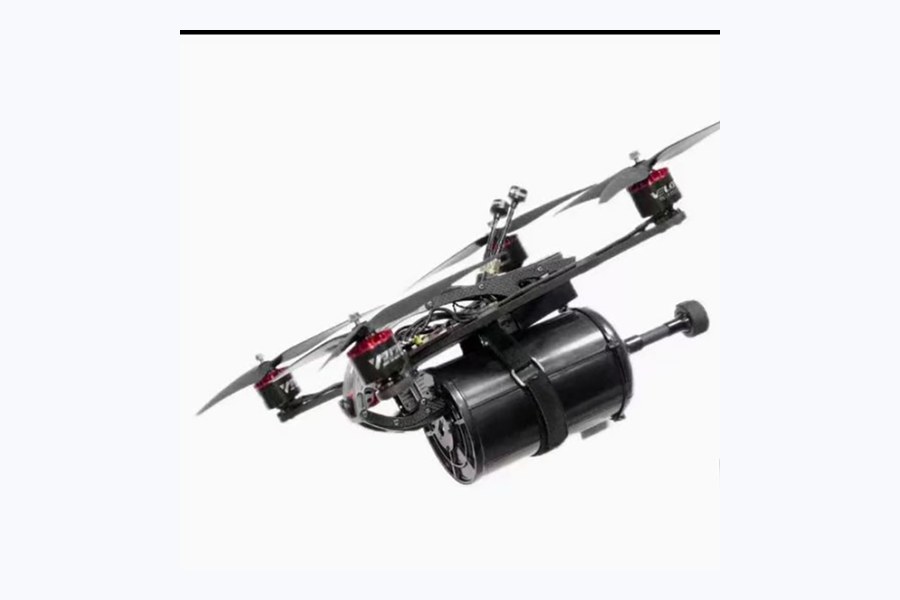
Thrust-to-weight ratios, hover throttle and the real cost of every extra gram you bolt on.
The 2:1 Rule
A useful FPV platform should produce at least twice its all-up weight in thrust. Below 1.5:1 the aircraft feels sluggish and is unsafe to fly; above 3:1 you are trading flight time for punch.
Real Numbers
These figures follow the airframes we actually build, so they can be checked against the product pages:
- 7 inch, 6S. A standard freestyle build carries roughly 0.3–0.8 kg. Heavy-lift 7 inch airframes are rated much higher — the 7 inch platform is rated to 2 kg.
- 10 inch, 6S–8S. Up to 3.5 kg on a long-range heavy-lift airframe such as the 10 inch thermal imaging platform.
- 13 inch, 12S heavy-lift. Up to 4.5 kg — see the 13 inch platform.
- 15 inch, 12S. Up to 8 kg for the heaviest sensor and delivery payloads.
Note the spread within a single class: the frame size sets a ceiling, but motor, propeller and battery choice decide where in that range a particular build lands. That is why the same 7 inch airframe can be a 0.5 kg freestyle quad or a 2 kg industrial lifter.
Frame class is the dominant factor, so it is worth reading the frame comparison in 7-inch vs 10-inch vs 13-inch FPV drones before fixing a payload target.
Every Gram Costs Minutes
As a rule of thumb, adding 10% to all-up weight cuts hover endurance by roughly 8–10%. That is why payload and endurance have to be specified together: a heavier sensor reduces the range the same airframe can reach, as described in long-range platform selection.
Specify the sensor, mount and battery separately, then let the airframe be sized around all three. Power system sizing and the other building blocks are covered in the FPV drone components guide.
Send us your payload specification and we will return a thrust sheet and flight-time estimate — request a payload assessment.