Guide
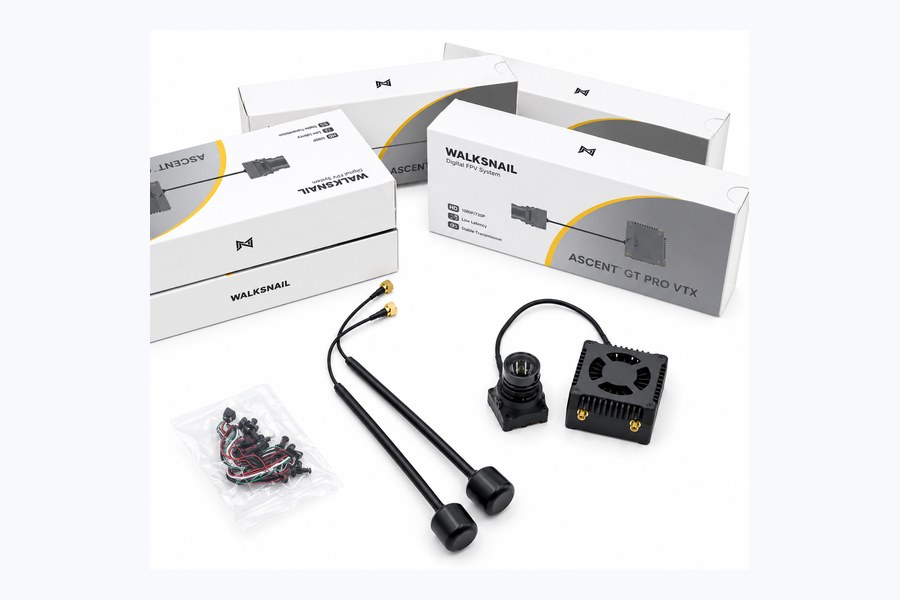
FPV VTX Guide: Power, Range & Video Transmission
by SkyVolt FPV Engineering Team · About the authors
In this guide
- What a VTX Actually Does
- Power vs. Reality
- Antennas Matter More Than Watts
How VTX wattage, antennas and frequency bands interact — and why more milliwatts is not always the answer.
What a VTX Actually Does
The video transmitter takes your camera signal and broadcasts it on 5.8 GHz (most common) to your goggles receiver. Power output ranges from 25 mW (indoor/cinewhoop) to 1.6 W+ (long range).
Power vs. Reality
- 25–200 mW: proximity flying, tight venues, racing where multi-power overlap matters.
- 400–800 mW: the sweet spot for most 5–7 inch builds; clean video to 2–5 km with decent antennas.
- 1–1.6 W: mountain and long-range work; requires heat management and clean filtering.
Antennas Matter More Than Watts
Doubling antenna gain often beats doubling power — without heat or regulatory issues. Match a directional patch or helical on the goggle side with a quality omnidirectional stub on the craft.
SkyVolt FPV stocks VTX modules from 400 mW to 1.6 W with smart-audio support for in-goggle power switching.