ELRS 2.4 GHz vs 915 MHz: Choosing a Radio Link Band
by SkyVolt FPV Engineering Team · About the authors
- Quick Answer
- The Details
- For Industrial Missions
- Ordering
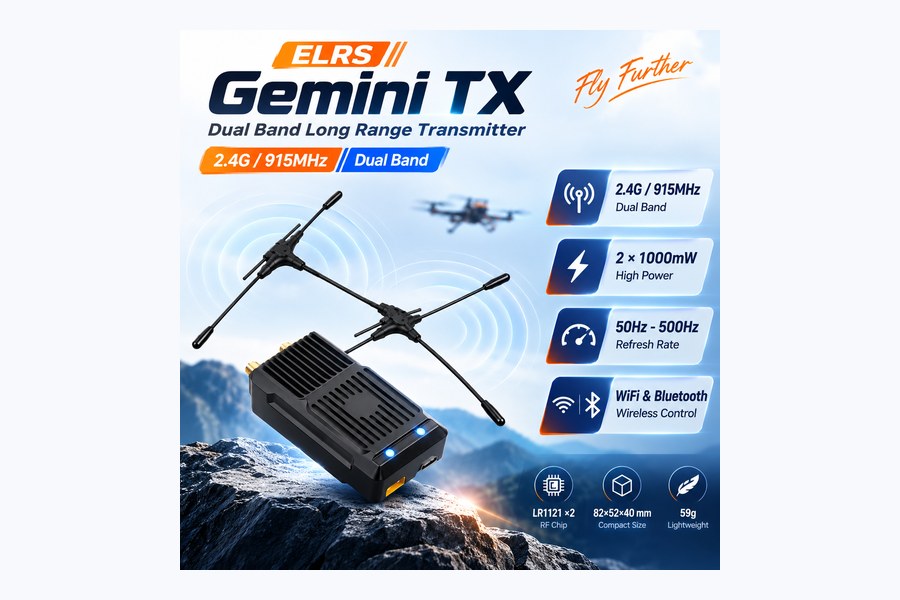
Latency, range and regulatory trade-offs between the two most popular ExpressLRS frequency bands.
Quick Answer
2.4 GHz for low latency and near-global legality; 915 MHz for maximum penetration and range in regions where it is licensed.
The Details
- 2.4 GHz ELRS. Faster packet rates (up to 1000 Hz), smaller antennas and legal almost everywhere. The natural choice for racing, freestyle and cinematic work.
- 915 MHz ELRS. Better obstacle penetration and link margin at extreme range, but limited to 100 Hz refresh and not licence-free in every country.
For Industrial Missions
Long-range inspection platforms benefit from 915 MHz in open terrain. Mixed fleets often carry dual receivers: 2.4 GHz for precision work close in, 915 MHz for the backcountry. The rest of the control chain — flight controller, ESC and receiver integration — is covered in the FPV drone components guide.
Radio link is only one half of the range equation; the video side is at least as important, as explained in how to choose a long-range FPV drone.
Ordering
All SkyVolt long-range platforms can be ordered with either band, or with both receivers fitted for mixed operations — see the long-range platform range and tell us your operating region so we can confirm which band is licence-free there.